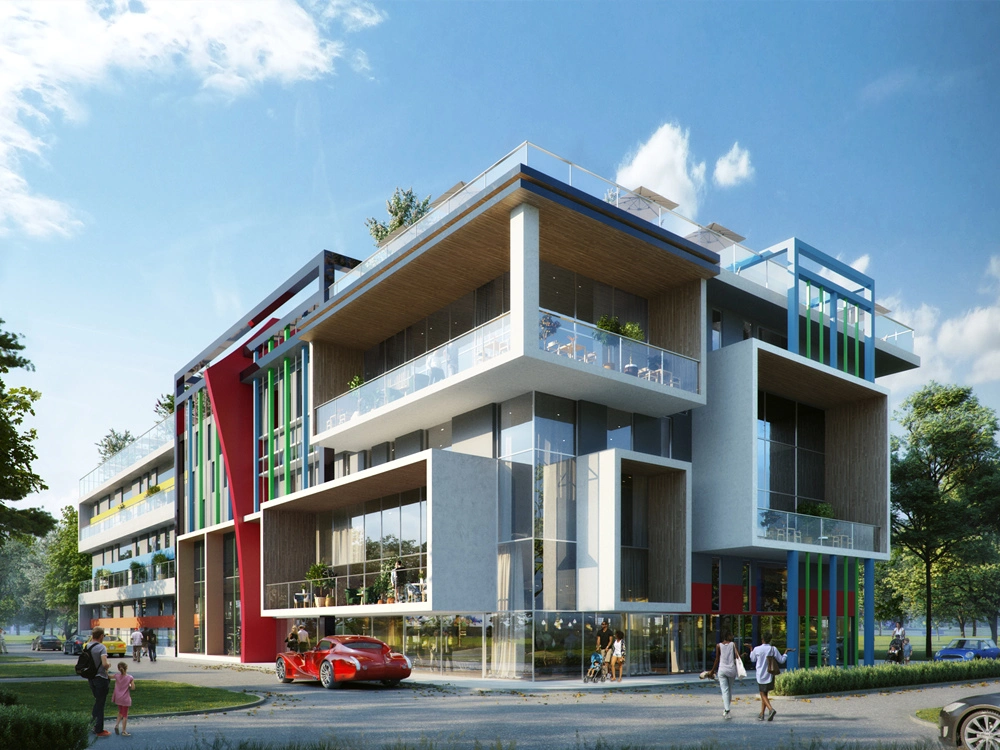
Beautiful images win attention, but accurate ones keep trust. If a visualization suggests proportions, materials, or surroundings that do not match the actual design, clients and officials may feel misled when the building takes shape. That is why precision is one of the most important qualities of a professional 3D exterior rendering service. Accuracy does not mean dull images. It means that dimensions, materials, and context are right, and that artistic choices support rather than distort the design. The same discipline matters in international architecture competitions, where juries expect images to reflect a buildable idea. This article looks at how precision is achieved and why it matters.
Accurate Geometry and Proportion
Precision begins with the model. Artists build the building from architectural drawings, checking dimensions, window sizes, and floor heights so the geometry is faithful.
Camera choice affects perception, too. Extreme wide angles can stretch proportions, while natural lenses preserve a realistic impression. Responsible studios choose viewpoints that flatter the design without distorting it.
Questions about unclear drawings should be raised early, not guessed.
Ask the studio to provide a quick check against drawings. A simple overlay of elevations on the draft image can reveal discrepancies in window positions or roof lines that would otherwise slip through.
Review the draft against the original drawings at each stage. A short checklist covering heights, widths, materials, and context makes it easy to confirm that nothing has drifted from the design.
Materials in a 3D Exterior Rendering Service
Materials should look and react like the real thing. Brick, timber, metal, glass, and stone each have their own texture, reflectivity, and color variation.
Scale matters, because patterns that are too large or small make a building look wrong. Matching actual product samples or specifications makes the image more credible.
Weathering and subtle imperfection add realism, provided they suit the project’s character.
Glass deserves special mention. It should reflect the sky and surroundings while still showing a hint of the interior, and getting that balance right is a sign of a careful artist.
Context and Surroundings
A building sits in a place. Neighboring structures, trees, roads, and topography should reflect reality, especially for planning submissions and public consultation.
Landscaping should be appropriate to the climate and the stage of the project, and people and vehicles should be sized correctly.
Aimir CG presents its work as precise and visually striking. For readers following the industry, its industry news and trends pages on any 3D exterior rendering service are a convenient way to see how the field discusses quality and standards.
Seasonal and time-of-day accuracy helps too. If a project will be built in a climate with distinct seasons, showing vegetation that fits the intended time of year supports credibility.
Balancing Accuracy and Appeal
Great studios pair honesty with artistry. They choose pleasant light, thoughtful composition, and context details that support the design, without hiding or exaggerating it.
Agree on a review process in which the architect checks drawings against drafts, so errors are caught before final rendering. Looking ahead, tools that link visualization directly to design models may reduce mistakes and speed up updates.
Be open to feedback from the studio. Experienced artists sometimes notice conflicts in drawings that architects have missed, and raising them early can save time and reputation.
Remember that precision also supports efficiency. When images are accurate from the start, there are fewer revision rounds, so schedules stay on track and budgets are protected.
Conclusion
Precision protects credibility. Whether you are presenting to clients or entering international architecture competitions, insist on accurate geometry, materials, and context. A skilled 3D exterior rendering service will deliver visuals that are both stunning and true to the design.