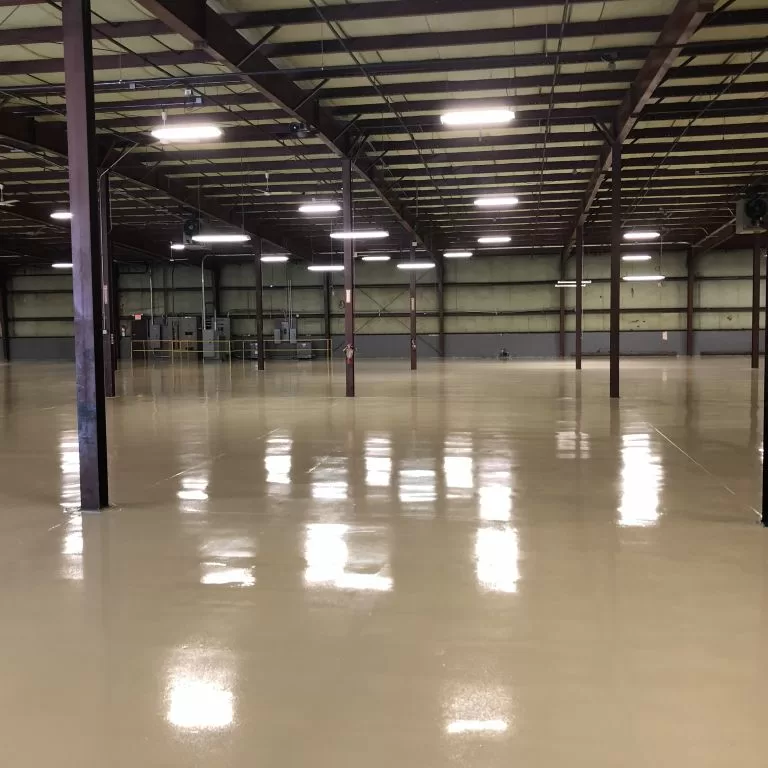
Two of the most common questions during the planning phase come down to the same underlying concern: what happens when something spills. Warehouses deal with water, oils, cleaning chemicals, and occasionally more aggressive substances, so understanding exactly what a coated floor can and cannot handle matters before installation begins.
Why This Question Comes Up So Often During Planning
Nearly every facility manager evaluating a coating project asks some version of this question early on, usually because a past experience with a leaking roof, a flooded loading dock, or a chemical spill that damaged bare concrete is still fresh in memory. Getting a clear, honest answer about what a properly specified warehouse epoxy flooring system can and cannot handle helps set realistic expectations before installation, rather than discovering the limits the hard way after a spill that exceeds what the chosen product was actually rated for.
Waterproofing Explained
A properly cured epoxy coating is effectively waterproof at the surface level. Water sits on top of the film and does not soak through to the concrete underneath, which is a major improvement over bare concrete that absorbs moisture and can lead to staining, mold growth in porous areas, or gradual surface degradation over time.
That said, waterproof at the surface does not mean waterproof at every seam or edge. Areas where the coating meets a wall, drain, or expansion joint need proper detailing during installation, since water finding its way underneath an edge over years can eventually cause localized lifting if those transitions were not sealed correctly the first time.
A Realistic Way to Think About Risk
Rather than searching for a single flooring product that resists absolutely everything, it is more productive to think in terms of matching resistance to realistic risk. List out the substances actually present in your facility, roughly how often spills happen involving each one, and how quickly staff typically respond when a spill occurs. A facility with rare, small spills that get cleaned up within minutes has a very different risk profile than one with frequent, larger scale chemical handling, even if both technically store the same substance somewhere on site. This kind of honest risk assessment, shared with the installer, leads to a much more sensible product recommendation than simply asking for the most chemically resistant option available regardless of actual need.
Chemical Resistance in Practice
Standard epoxy formulations handle a wide range of substances common in warehouse environments without issue, including most oils, greases, mild cleaning agents, and general industrial fluids like hydraulic fluid or coolant. Brief exposure followed by reasonably prompt cleanup rarely causes any lasting damage to a properly cured system.
Resistance varies more with concentrated or prolonged exposure to stronger substances. Strong acids or bases left sitting for extended periods can, over time, etch or soften even a well formulated coating if it was not specifically selected for that type of chemical environment. This is why facilities handling specific aggressive chemicals, such as battery acid at forklift charging stations or specific industrial solvents, often specify a chemically resistant formulation designed for that exact exposure rather than relying on a general purpose product.
Where Standard Epoxy Has Limits
No coating is universally resistant to everything, and it helps to know the common limitations. Prolonged standing water in areas without proper drainage can eventually stress even a good coating at seams and edges over years of exposure. Certain strong solvents, if specific formulations are not rated for them, can soften or discolor a standard epoxy top coat with repeated contact. Extreme, sustained UV exposure, relevant mainly for coatings near large windows or skylights, can cause yellowing over time in formulations without UV stabilizers, though this is a cosmetic issue rather than a structural one.
Choosing the Right Formulation for Known Exposure
Any facility with predictable chemical exposure beyond typical warehouse conditions should discuss that specifically with the installer before choosing a product. Battery charging stations, chemical storage areas, and washdown zones in food or beverage handling facilities all benefit from formulations specifically rated for their known exposure, rather than defaulting to a general purpose system and hoping it holds up.
Testing and Verification
Reputable manufacturers publish chemical resistance charts for their specific products, listing how the coating performs against common substances over both short term and extended exposure. Reviewing this chart against the actual chemicals present in a facility, rather than relying on general marketing claims about chemical resistance, gives a much more accurate picture of expected performance.
Detailing at Joints, Drains, and Wall Bases
A coating is only as waterproof as its weakest transition point. Expansion joints in the concrete slab need to be properly addressed, either by routing and filling with a flexible sealant that moves with the joint, or by carrying the coating across in a way that accounts for slab movement without cracking. Drains need integrated cove or flashing details so water is directed into the drain rather than finding its way under the surrounding coating edge. Wall bases, particularly in wash down areas, often get a cove base detail that curves the coating up the wall slightly, eliminating the sharp right angle corner where debris and moisture would otherwise collect and eventually compromise the seal.
Skipping or rushing these details is a common source of long term problems that do not show up immediately after installation but instead surface a year or two later as isolated lifting or staining near specific edges, even when the main field of the floor still looks perfect.
How Temperature Extremes Interact With Waterproofing
Facilities that experience freeze and thaw cycles, whether from outdoor exposure near loading docks or from cold storage transitions, add another layer of consideration. Water that finds its way beneath a coating edge and then freezes can expand and worsen any existing lifting, turning a small cosmetic issue into a larger repair much faster than in a climate controlled environment. This is part of why proper edge detailing and drainage design matter even more in facilities with any exposure to freezing temperatures.
Practical Steps Before Choosing a Product
Before finalizing a product choice, it helps to walk through the specific substances the facility regularly handles with the installer, including cleaning chemicals, any raw materials or products stored on site, and typical spill scenarios based on past experience. This conversation, combined with a review of the manufacturer’s resistance chart, is far more useful than assuming a generic epoxy system will automatically handle whatever the facility happens to encounter.
Understanding Cure Time and Chemical Resistance Together
A coating’s full chemical resistance is not active the moment it looks dry to the touch. Manufacturers typically specify a full cure period, often seven days or more, before a floor reaches its complete rated resistance to chemicals and moisture. Exposing a freshly coated floor to aggressive substances before that full cure window has passed, even if the surface feels hard, can result in staining, softening, or reduced long term performance that would not have occurred had the facility waited the full recommended period before resuming normal chemical handling in that area.
A Final Word on Realistic Expectations
No flooring system, regardless of price or brand reputation, is completely immune to every possible waterproofing or chemical challenge a warehouse might throw at it over many years of use. The goal is not finding an impossible perfect product, but matching a well proven, properly installed system to the actual conditions of your facility, then maintaining it consistently so it performs the way it was designed to. Facilities that approach the decision this way, with realistic expectations grounded in their actual daily operations, tend to be far more satisfied with the long term result than those chasing a marketing claim of total resistance to everything, rather than a practical, well matched system built for the real conditions on their own warehouse floor.
Frequently Asked Questions
Can epoxy flooring be used in areas with standing water, like wash bays?
Yes, but it requires proper drainage design and careful sealing at all edges and joints to prevent long term issues, and a formulation specifically suited to constant moisture exposure is recommended.
Will bleach damage a standard epoxy floor?
Diluted bleach used occasionally is generally fine on a properly cured coating, but frequent or concentrated exposure without prompt rinsing can dull the finish over time.
Does chemical resistance mean the floor never needs to be cleaned after a spill?
No, prompt cleanup is still recommended even for chemicals the coating is rated to resist, since minimizing contact time always reduces any risk of gradual wear.
Are all epoxy coatings equally waterproof?
No, formulation quality and proper installation, including correct edge and joint sealing, both significantly affect real world waterproof performance.
How can I find out if a coating resists a specific chemical my facility uses?
Request the manufacturer’s chemical resistance chart for the exact product being considered and compare it against the specific chemicals present in your operation.